Foundry and industrial hazardous waste: RCF, dusts, sludges and filter cake
Most general waste contractors will not touch this material, and the ones who will often do not understand it. Here is what the main streams are, what the paperwork actually requires, and what goes wrong when a site gets it wrong.
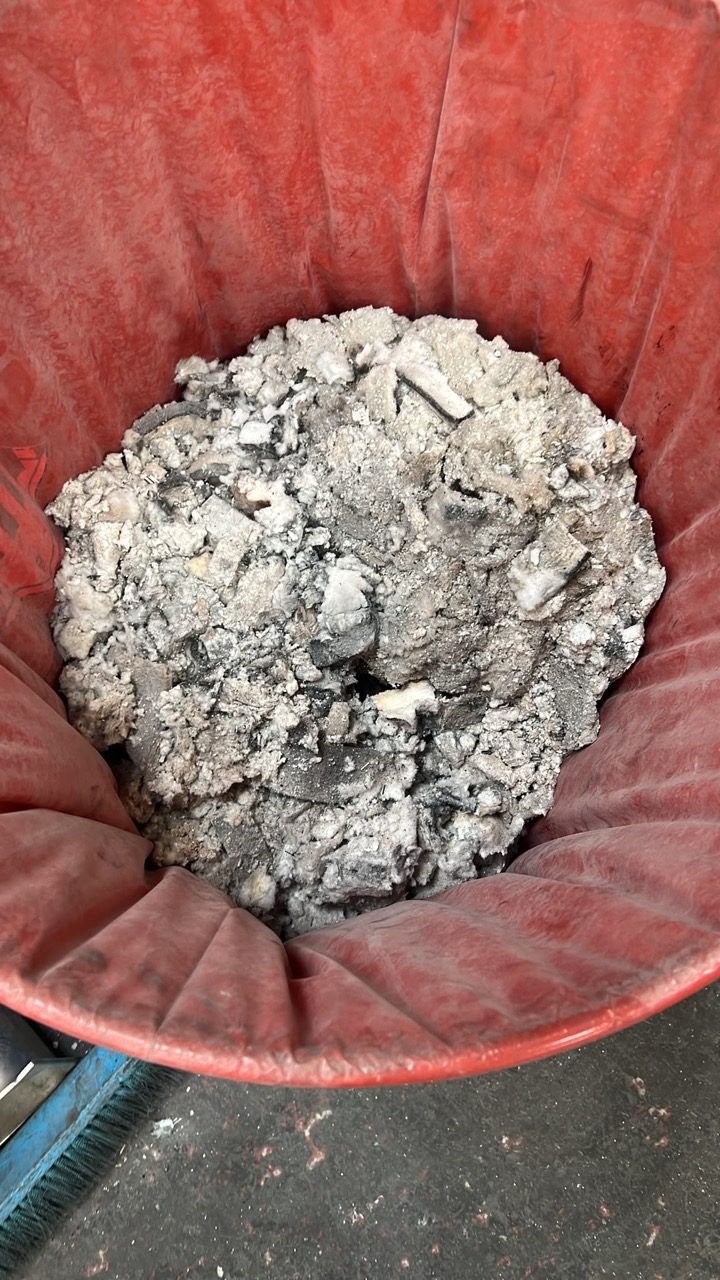
Foundries, forges and heavy industrial sites produce waste streams that sit outside what a normal skip or grab operation can handle. The material is often dusty, sometimes carcinogenic, usually classified as hazardous, and always accompanied by more paperwork than a load of muck.
The result is a familiar pattern. A site has one contractor for general waste, a different one for metals, and nobody who will take the awkward streams – so the awkward streams sit on site in a corner, in bags that were never meant to hold them, until an audit or an inspection forces the issue.
The main streams
Refractory ceramic fibre (RCF)
RCF is the insulating material lining furnaces and kilns. It is classified as a category 1B carcinogen, which means it is treated as hazardous waste and needs handling that reflects that – not a skip in the yard.
The practical problem with RCF is that it becomes most dangerous exactly when you are removing it. Used fibre that has been through high temperatures is friable, it releases respirable fibres when disturbed, and a furnace strip-out is precisely the operation that disturbs it. Removal wants dust suppression, correct RPE, and the material bagged and sealed at the point of removal rather than moved around the site loose.
We bag RCF on site and remove it under consignment. It is one of the streams we get called about most, usually because the site has found nobody else willing to take it.
Furnace and cement dusts
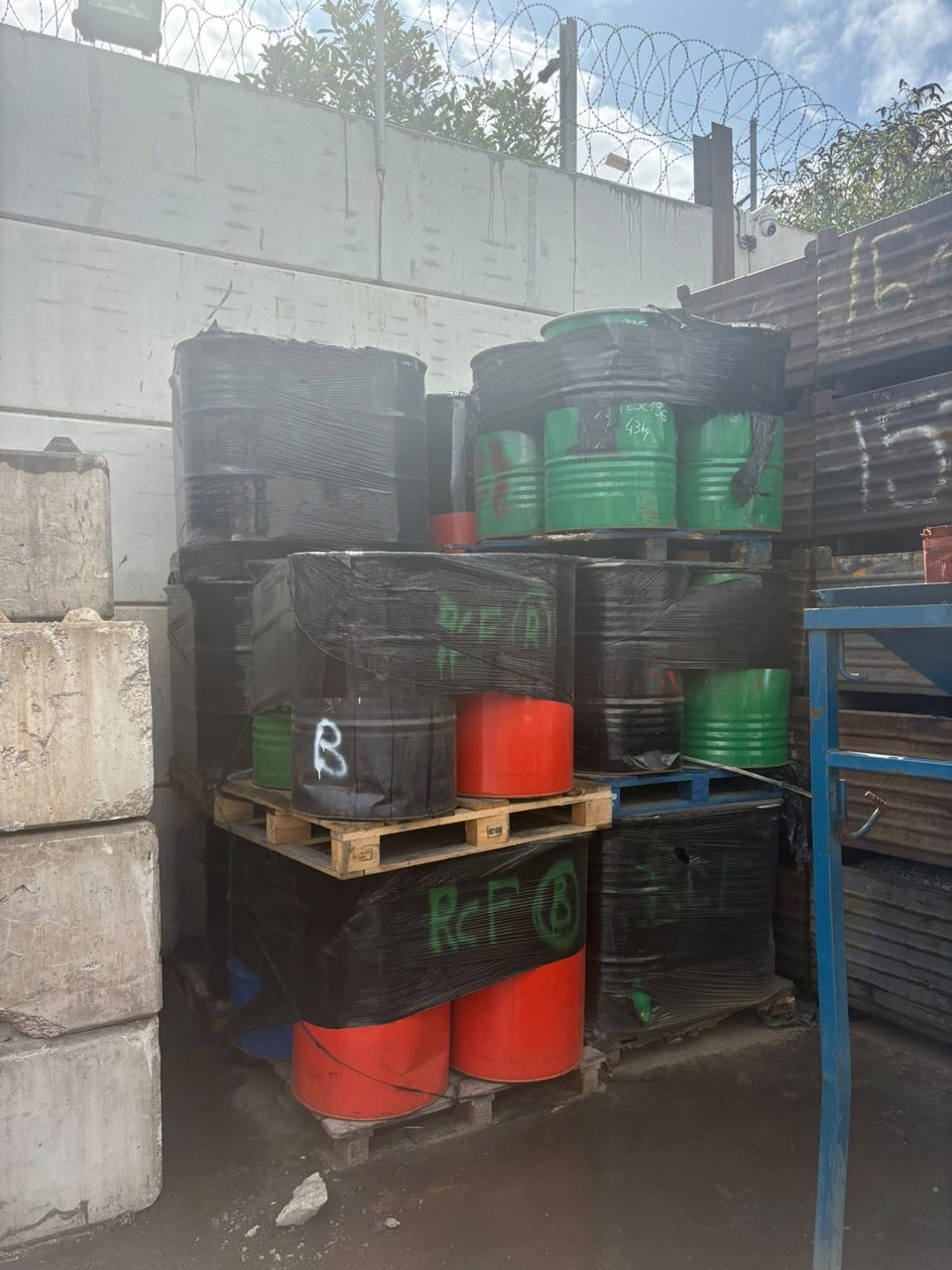
Baghouse and filter dusts are fine, mobile and easy to lose control of. Whether a given dust is hazardous depends on what is in it, which depends on what was being melted or processed – so the classification question has to be answered per site and per stream, not assumed from the material name.
Handling is a containment problem before it is a disposal problem. Fine dust wants sealed containers, not open skips, and transfer needs to happen without creating an airborne cloud across the yard.
Sludges and filter cake
Wet process residues, tank bottoms, treatment plant filter cake. These are awkward for different reasons: variable composition, high moisture content, and a classification that often cannot be determined by looking at it.
This is where testing earns its keep. The same principle applies as with contaminated soil – characterise the material first, and the disposal route and the cost follow from the result. Guess, and you either overpay for a hazardous route you did not need or send hazardous material somewhere it should not go.
Silica
Spent foundry sand and silica-bearing residues bring respirable crystalline silica into the picture. Like RCF, the risk is in the handling and the dust, and the controls need to be in place before anyone starts moving it.
What the paperwork actually requires
Three things sit behind every movement of hazardous waste, and sites get caught out on all three.
| Requirement | What it means in practice |
|---|---|
| Correct classification | The waste has to be assessed and coded properly. The code drives everything downstream – who can carry it, where it can go, what it costs. |
| Consignment note | Hazardous waste moves under a consignment note. It travels with the load and copies are retained. This is the document an inspector asks for. |
| Duty of care | Producing the waste does not end your responsibility for it. If it ends up somewhere it should not, that traces back to you regardless of who moved it. |
Requirements differ between England, Wales, Scotland and Northern Ireland, and they get revised. If you are building a compliance position rather than just clearing a yard, check the current regulator guidance for your nation – we will tell you what applies to a given load, but the site holds the duty.
A carrier who will “take it away” is not the same as a carrier who is licensed to carry that stream to a facility permitted to receive it. Ask which facility a load is going to and what permit it holds. Anyone who cannot answer that is a problem waiting to become yours.
Treatment and recovery, not landfill by default
The reflex assumption with hazardous waste is that it all ends up in the ground at high cost. In practice a good proportion of these streams can be treated or recovered, and we route material that way wherever the classification allows it.
That matters for two reasons. It is usually cheaper than hazardous landfill, and it is the number that goes in your environmental reporting. We divert 95% of what we handle from landfill across the business, and hazardous streams are included in that rather than quietly excluded.
What goes wrong
- Material stored too long – a corner of the yard becomes a de facto waste storage area without the controls or the permissions that implies
- Wrong container – fine dusts and friable fibre in bags or skips never designed to contain them
- Classified by assumption – a code copied from the last load rather than assessed for this one
- Mixed streams – combining wastes to save a collection, which can push the whole load into a more expensive classification
- No paperwork trail – the load went, nobody kept the note, and the audit is next week
How we handle it
We are independent, which matters more here than on aggregates. Hazardous streams need a facility that is permitted for that specific material, and no single operator covers everything – so being tied to one disposal route means either turning work away or forcing material down the wrong one. We source across a network of licensed operators and match the stream to the right destination.
In practice that means we can take the whole site rather than the easy parts: the RCF, the dusts, the sludges and the general waste, on one account, with the paperwork consistent across all of it. Sites usually come to us for one awkward stream and end up moving the rest across because it is simpler.
We cover Wolverhampton and the Black Country, Birmingham, Coventry, Telford, Shrewsbury and Leicester, and we can mobilise quickly when a site needs to be compliant before an audit or an inspection rather than eventually.
Got a stream nobody will take?
Tell us what it is and where it’s come from. If it needs testing first we’ll say so – and if we can move it this week, we will.